
Review: Time Crisis (PlayStation 4/5)
If you’re a fan of light gun games in any capacity, you’ll most likely already know and love the Time Crisis series, and probably be pretty familiar with the original game that started it all in 1995, whether you played it in arcades or one of its various ports over the years. The port that popularized the game more than any other is undoubtedly the version for the original PlayStation, released in 1997, which is technically the version we’re talking about here. Since this version was just re-released on PlayStation 4 and 5 this week with a few changes and updates, I wanted to take a deeper dive to see how this version fares overall.
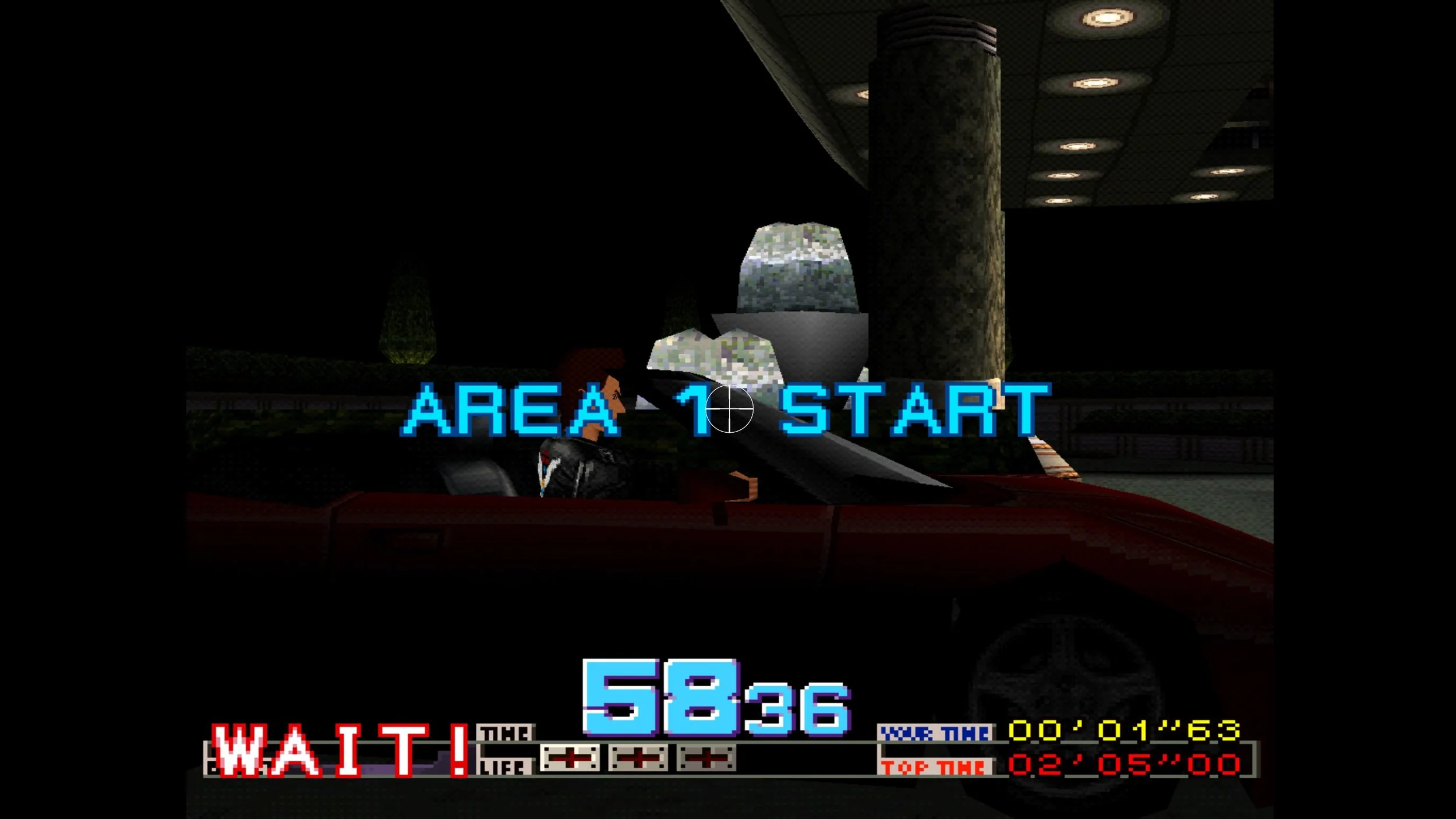
To tackle the absolute basics first, the game technically runs quite well on the PS4 and PS5 versions, smoothing out the somewhat inconsistent framerate and jagged polygons that the PS1 version typically has, and making it a great experience in this regard. There’s also save state and rewind features, as well as some additional visual and control options.
As most people will have already asked themselves before reading this, one of the biggest aspects we need to talk about here is the controls and how you’ll be able to play the game on modern consoles without a light gun. There’s some good news and bad news on this front, since they’ve updated the game to be controllable using the gyro function that’s built into the DualShock 4 and DualSense controllers, but the way it’s been implemented could’ve certainly been a lot better.
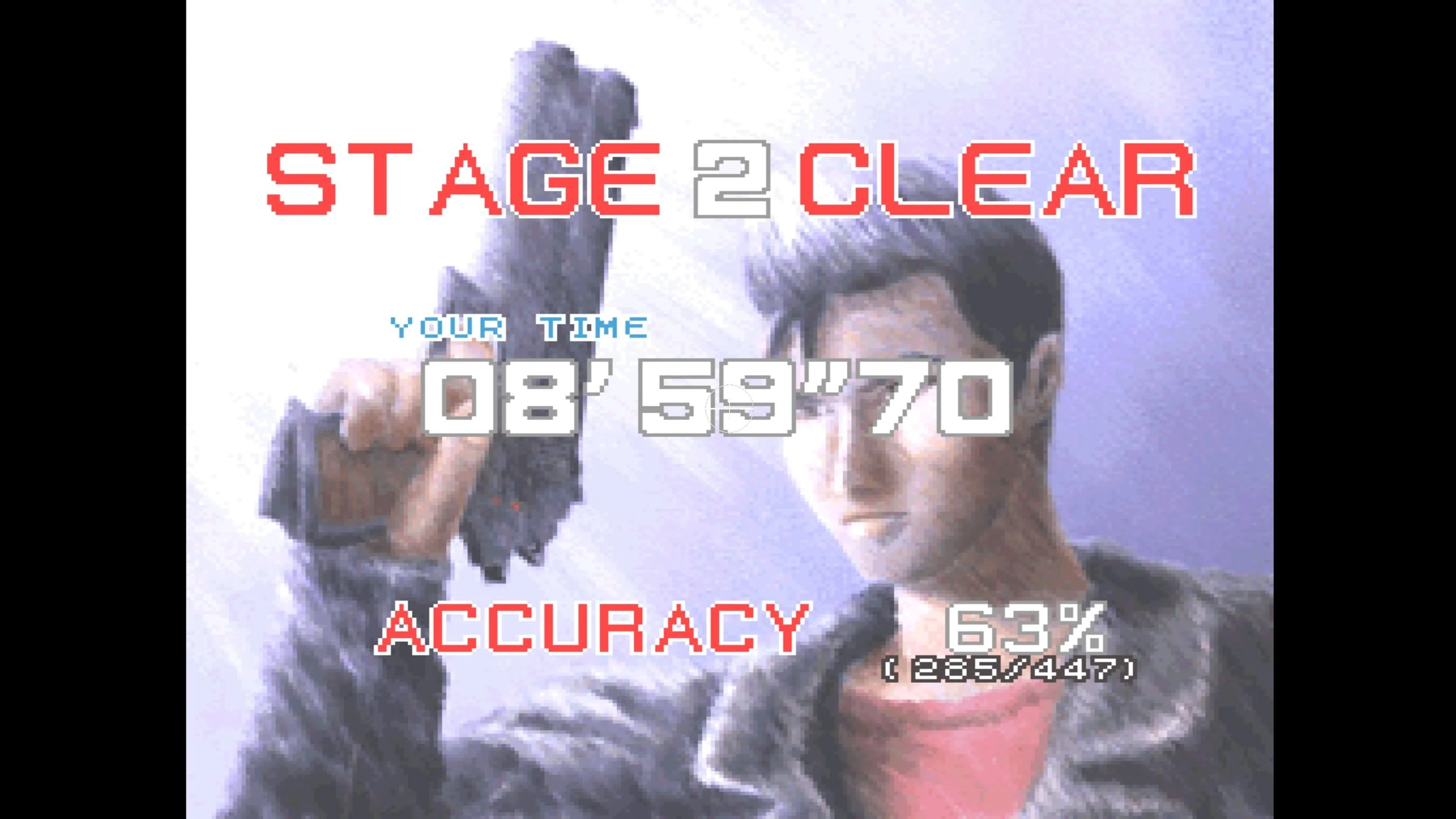
While the gyro option is, by default, a much better way to play the game rather than using a D-pad or analog stick to control the cursor, but it also comes with its own set of caveats and negatives. For starters, the gyro sensor in the DualSense controller for PS5 is much more advanced than the gyro in the DualShock 4, and it’s very apparent when you compare the two side-by-side.
The DualSense generally stays more accurate overall without needing re-centering quite as frequently, but the DualShock 4’s sensor has a decent amount of drifting to it every time you move it in any direction. This causes it to frequently need re-centering and makes accurate shooting much harder than it is with the DualSense.
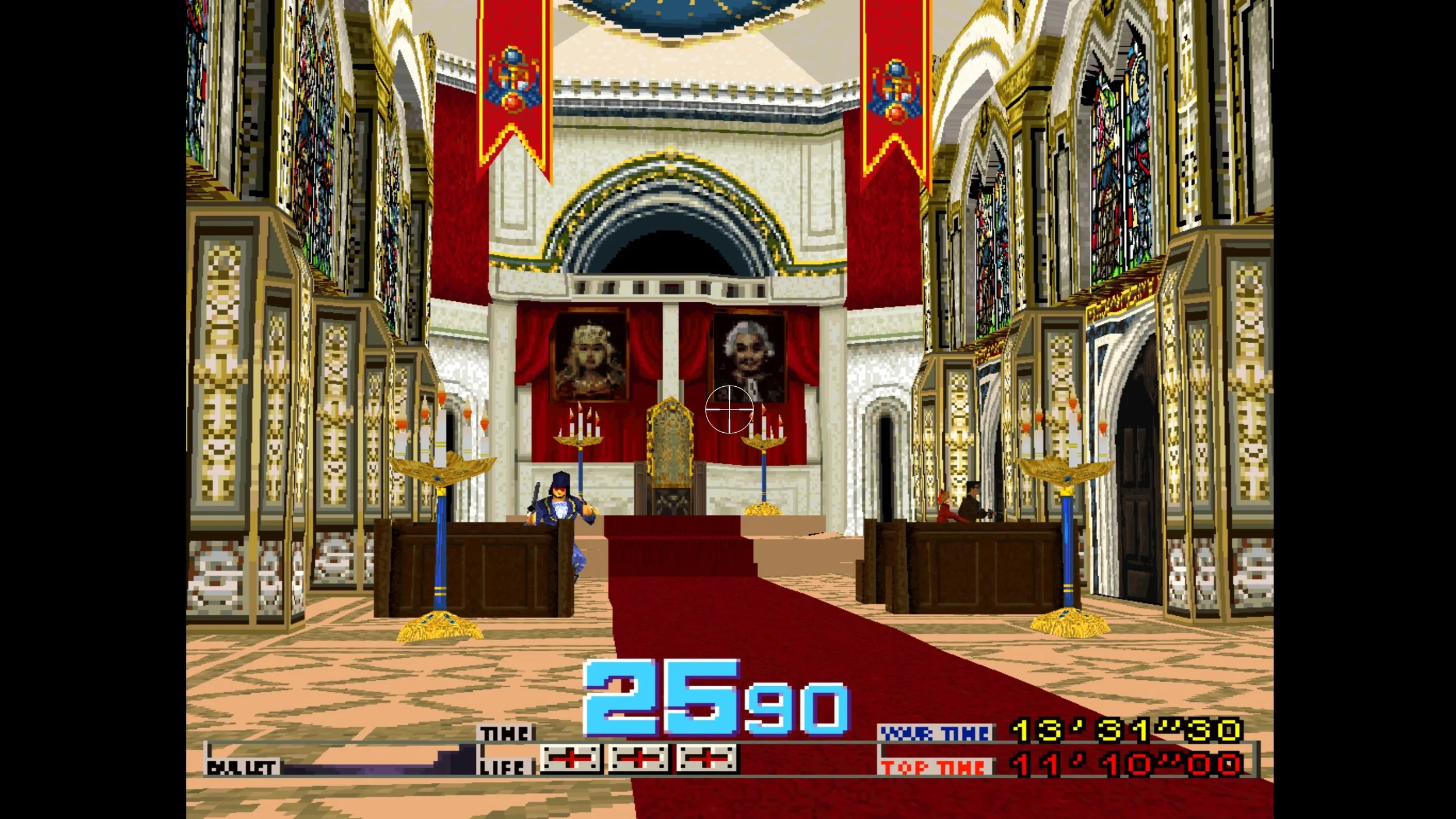
One major factor that makes the gyro implementation worse than it should be for both versions is that there’s no options for fine-tuning the gyro settings like there are in some other light gun games that have been released for the Switch or PlayStation platforms in recent years. If there were options to adjust dead-zones or sensitivity for the X and Y axes, this could’ve been a much better experience overall, making it closer to the experience of something like the House of the Dead Remake, where the breadth of gyro options make it more tolerable to play.
Another puzzling decision here is that when they programmed the ability to re-center your cursor with the push of the Triangle button (the game/menus don’t even tell you about this..) which is absolutely necessary for light gun games to be playable with gyro at all, they made it so it only re-centers the X axis, and the Y axis cannot be recentered at all. This leads to a lot of extra time spent messing with the controller orientation to make your shots accurate, and especially in a game where the clock is always running against you, it’s a big sore spot.
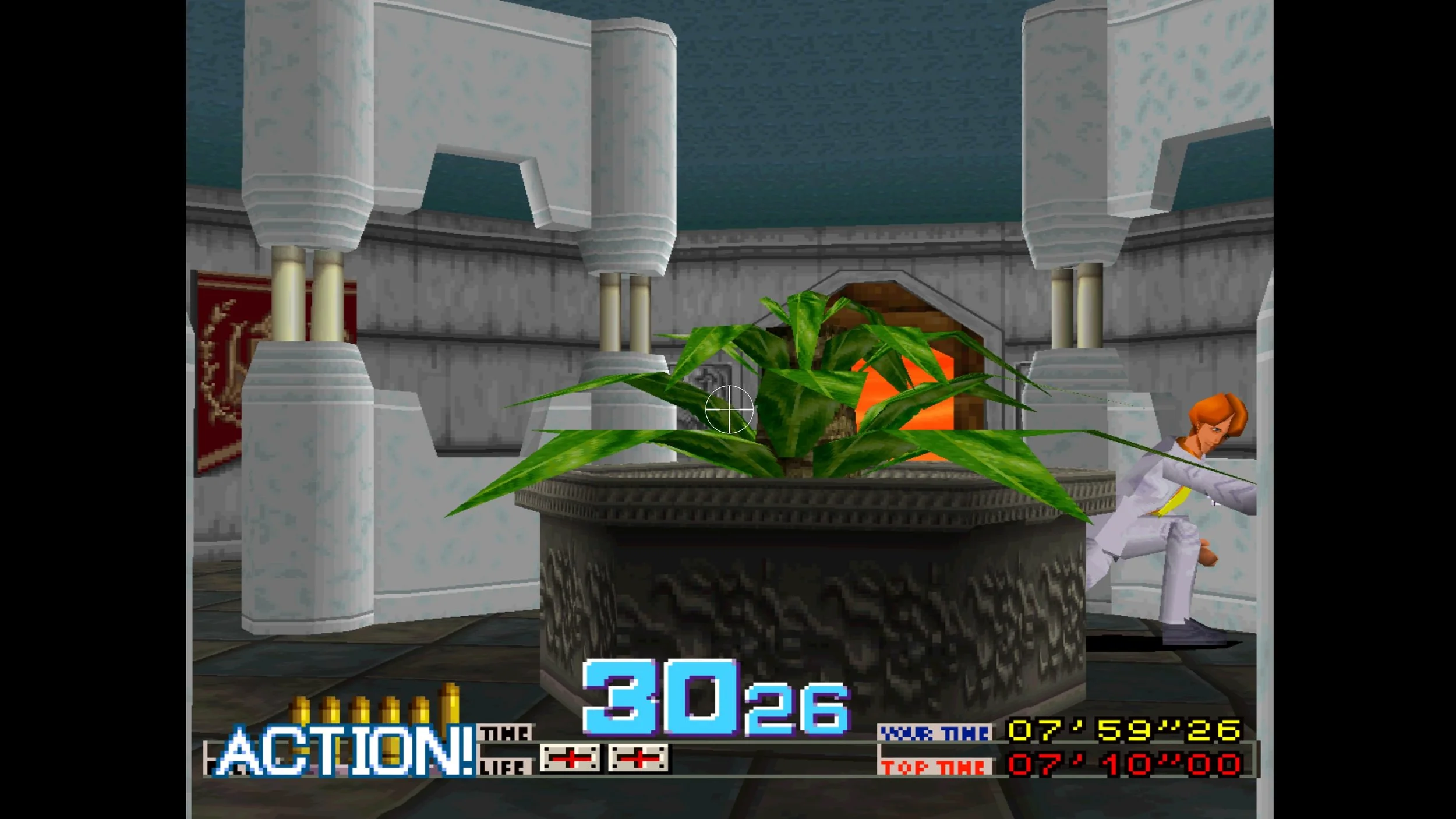
I also did full testing to see if the game would work with any additional controllers, including the PS Aim, PS Move, G’AIM’E light gun, PSVR 1/2, and a mouse, and unfortunately none of these other control methods worked. This is a huge missed opportunity from Sony and Namco to make this release closer to a light gun experience, and I hope they’ll patch in at least some other control functionality at some point.
Being able to remap any of the control buttons to any other button gives you a little mileage towards finding a more comfortable way to play with the gyro aiming, but it won’t get you all the way to something resembling a light gun experience without some additional options. I’m hoping they’ll patch in some additional gyro and re-centering options as well additional controller functionality in the future to make it an experience that’s much more worth playing than it is in its current state.
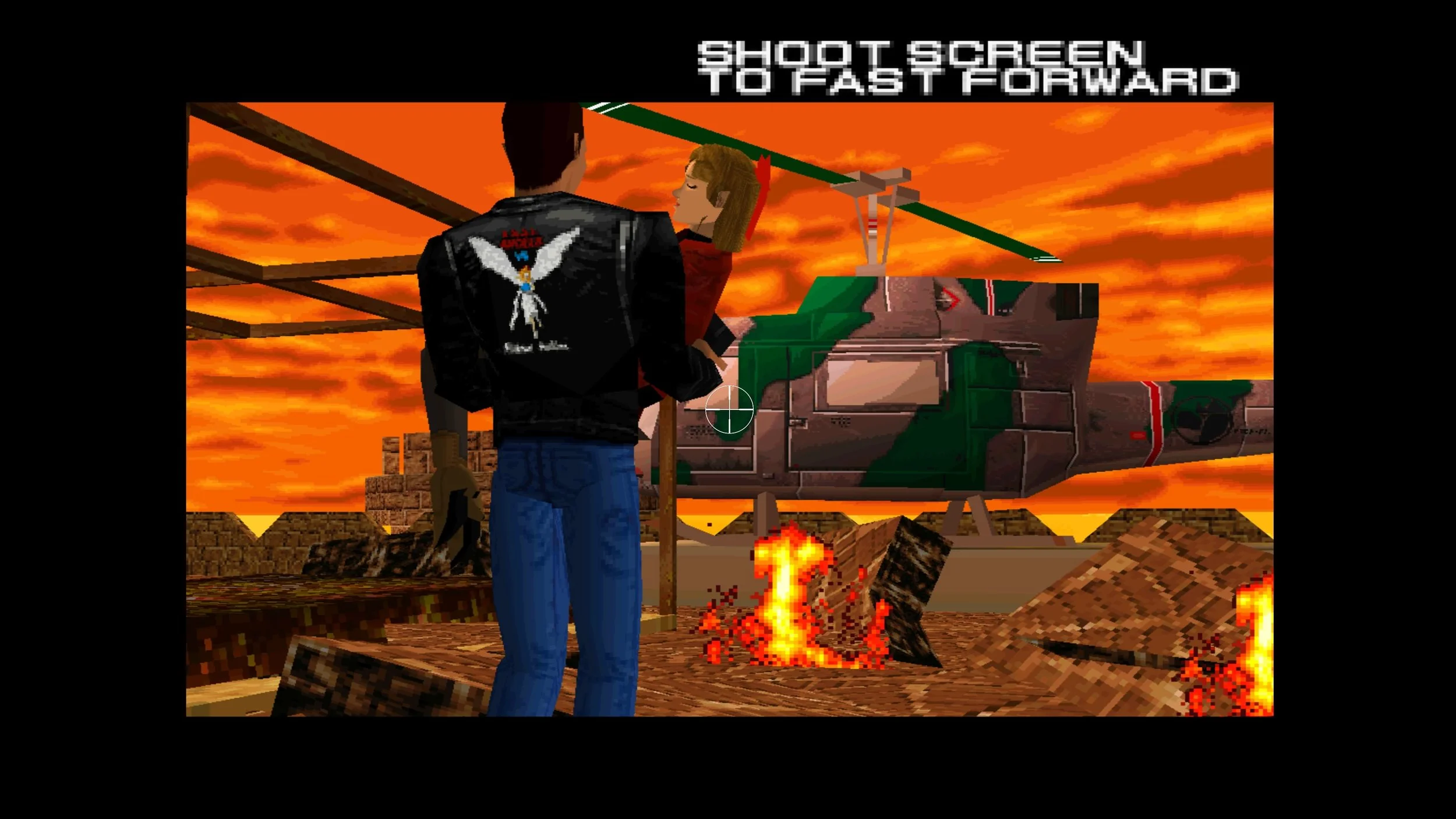
As for some of the other details of the release, the game can be purchased for $9.99 USD from the PlayStation Store or “rented” with a PS+ Premium subscription, and it’s a fair price for such a classic game, but the relative lack of control options and the absence of a PlayStation Trophy list makes this have less bang-for-your-buck than it could have.
Even if the PS1 version has an extra mode to play with compared to the arcade version, this version of Time Crisis might have limited appeal to anyone who isn’t a die-hard Time Crisis fan or someone simply desperate to re-live their PS1 days with some mostly-unsatisfactory control methods. In its current state, I’d only approach this version with its limitations and shortcomings fully in mind or you may end up a bit disappointed with it.