
Review: Intec Time Breaker Light Gun
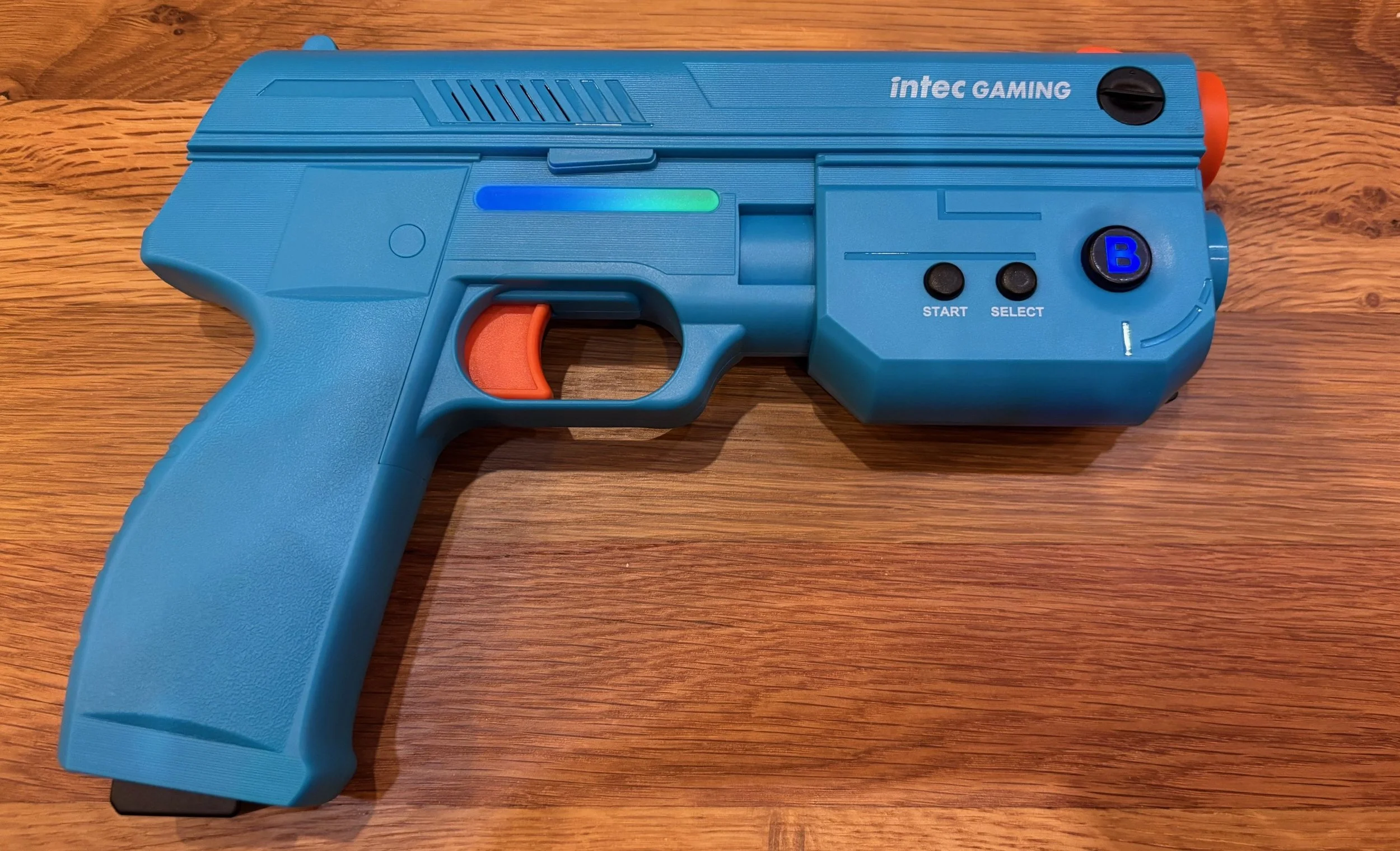
Last Fall, at the Portland Retro Gaming Expo, I got a chance to try a new light gun that was set to hit the market in the near future, called the Intec Time Breaker light gun, which had one version in development to work on the PlayStation and PlayStation 2 platforms, and one that worked on PC. At the time, the guns were still in development and I got to try out prototype versions that still needed some improvements and extra polish to work well enough to consider as a viable solution for modern light gun needs.
Now, several months later, the retail version of the gun for PS1 and PS2 has released and I’ve been testing it for a few weeks, putting it through a lot of paces to see how it fares, and I’ve got a lot of thoughts on it so far.
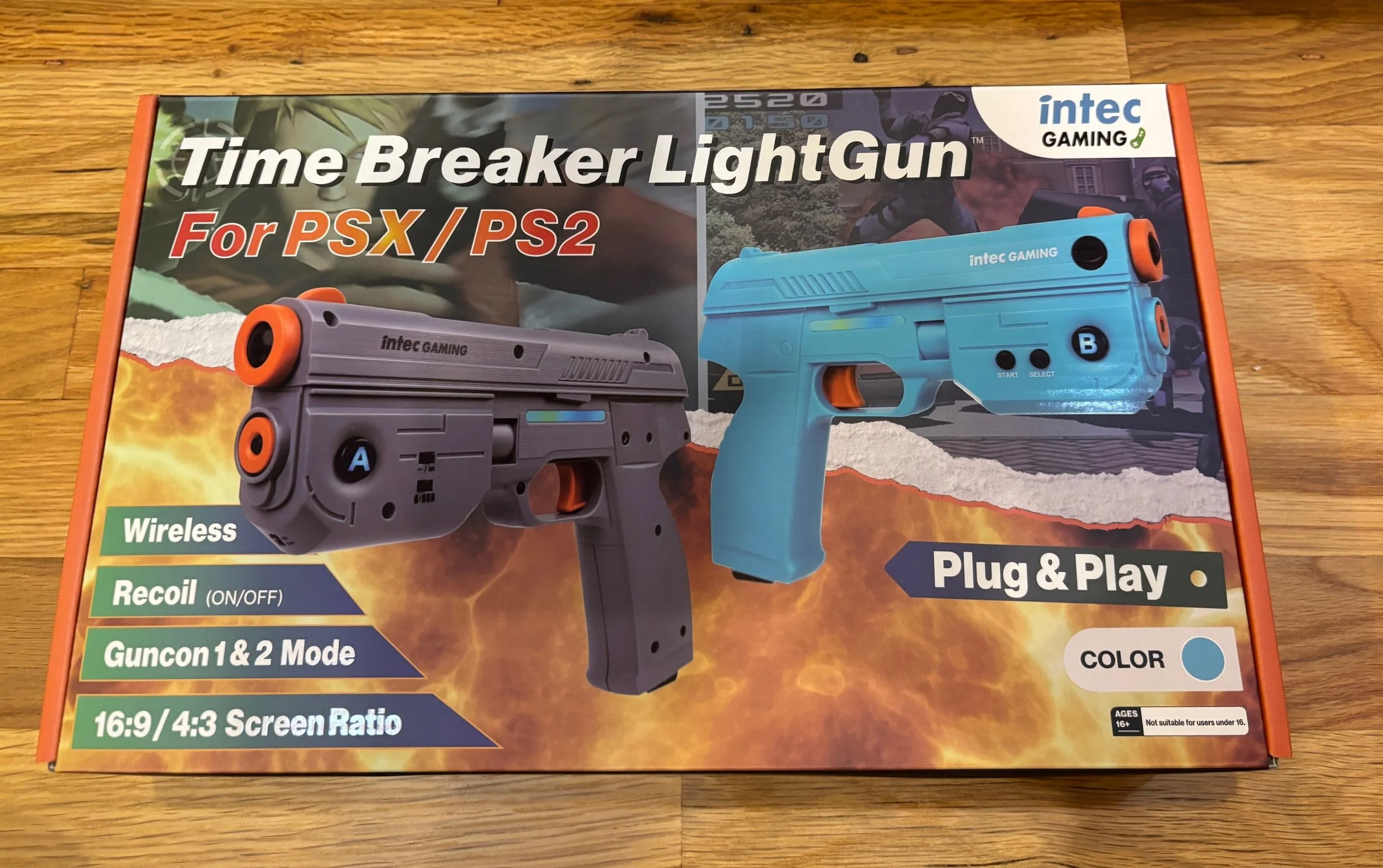
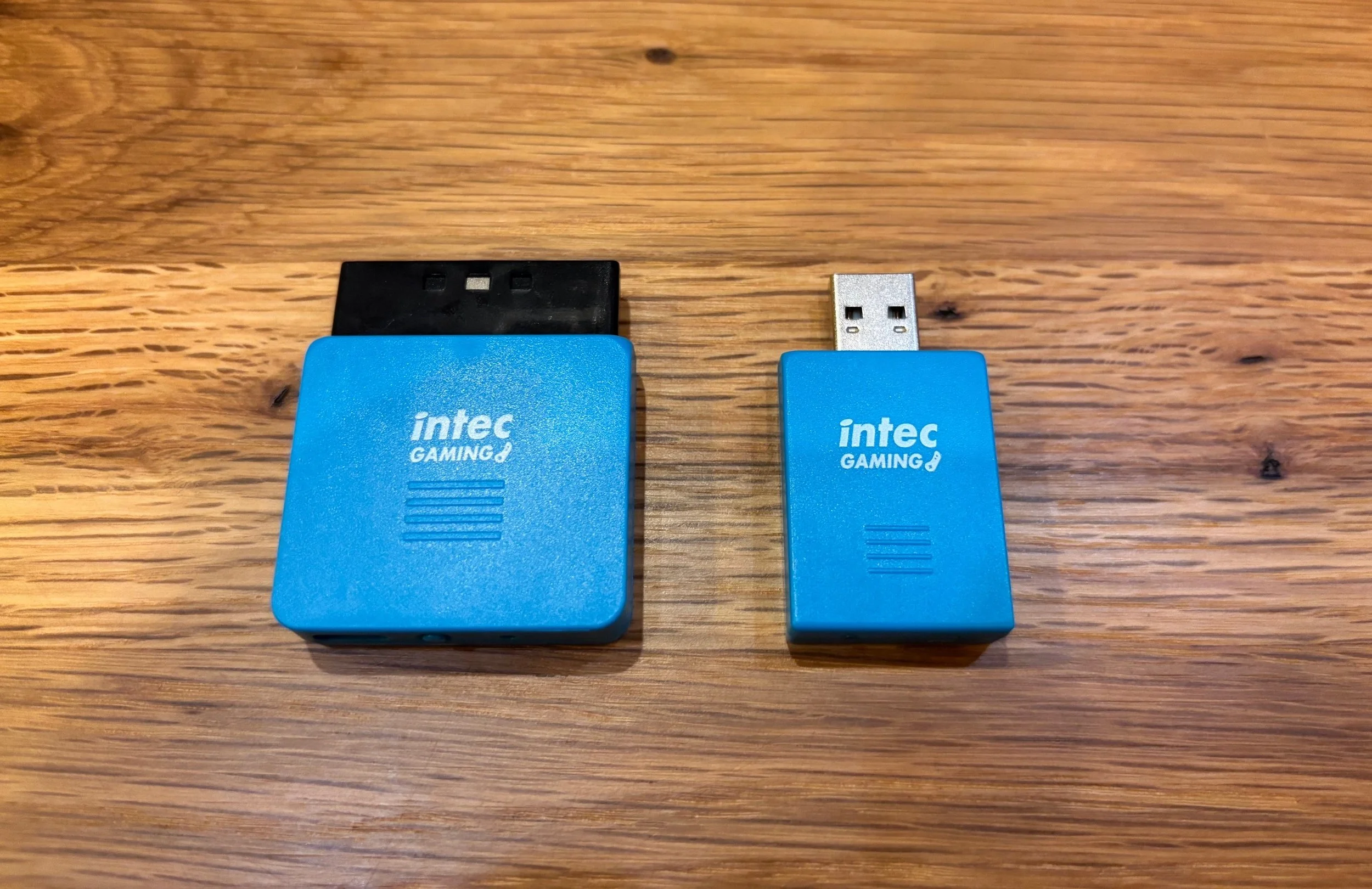
Starting with the physical and ergonomic aspects of the gun, the basic version comes packaged with the gun itself, a sensor, dongles for PS1 and PS2, and some extra cables. There’s an upgraded version that comes with an HDMI adapter for PS1/PS2, and also an ultimate package that comes with two guns instead of one, but I got the version that comes with the HDMI adapter and one gun.
When first unboxing, everything was neatly packaged and presented, and felt pretty easy to understand. The assembly of the gun’s two pieces was pretty simple using the included allen wrench to complete it, and there was an extra protection sticker over the front lens that unfortunately left some sticky residue after removing. This took some extra cleaning to get off, but it wasn’t too much hassle, just maybe something they can improve on future manufacturing batches of the gun.
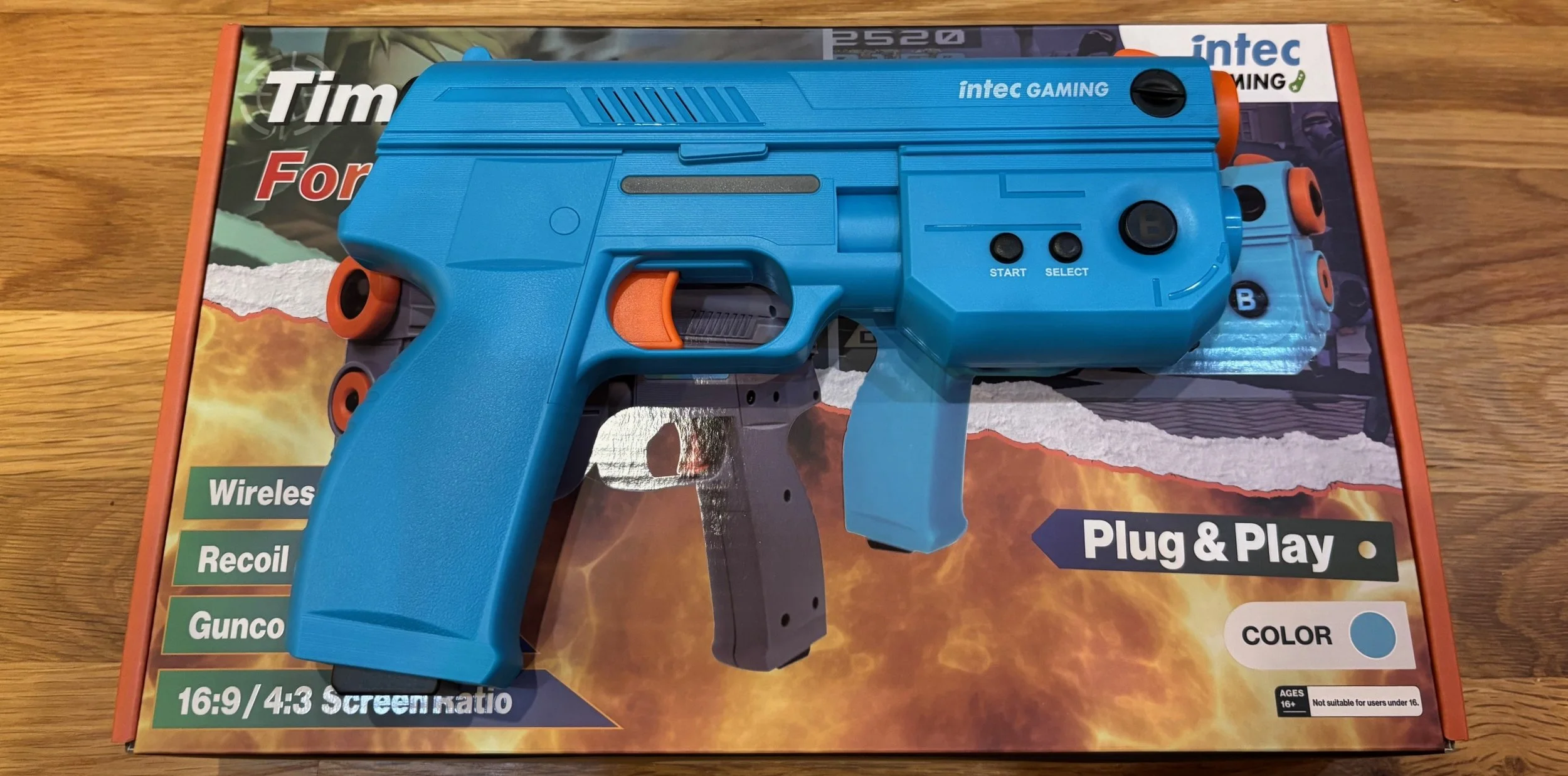
The general shape of the gun is very obviously based off the original GunCon design, so it feels familiar with just a few small differences. The weight of the gun felt very balanced, feeling right in the middle between something like the original GunCon or a Sinden light gun and something heavier like an Retro Shooter Reaper or arcade style gun. Despite it having a rechargeable battery and a lot of technology inside, it felt comfortable to use in longer gaming sessions without a lot of arm strain, and not having to rely on a cable to connect to the console also means you have more freedom of where you can play from and not having to be physically tethered to the console.
The trigger feels very responsive and micro-switched, with the trigger guard shape being greatly improved from the cramped one that was on the prototype I tried last year. There’s a 3.5mm headphone port in the bottom of the grip where pedals can be plugged in, which we’ll talk about more later, and a big reload button right behind it, which acts as the GunCon2’s C button.
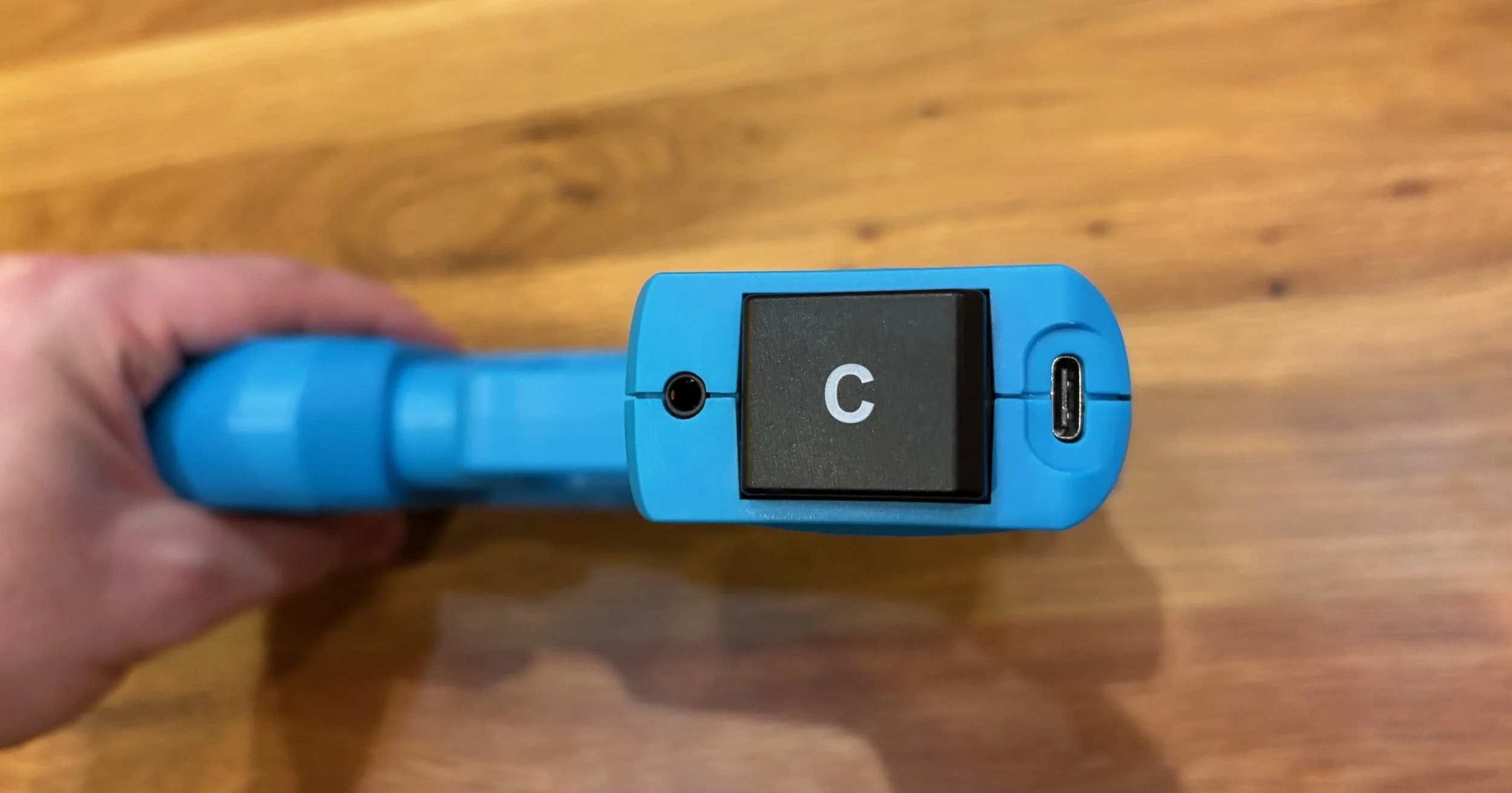
There’s several other little bells and whistles scattered around the gun, like an auto-fire switch, a recoil/vibration switch, and several calibration buttons, as well as a joystick on the back that serves as the GunCon2’s d-pad. I had mixed results with the auto-fire switch, since some games have different clip amounts before having to reload, and it was a bit inconsistent overall. The battery life was truly excellent, lasting for many hours without needing recharge, even when having the recoil function active the whole time.
The recoil function of the gun is pretty impressive, combining a short but strong vibration with a heavy mechanical knock, making it feel more immersive than just the typical vibration that most third-party light guns from the PS1/PS2 era had. It’s certainly not as strong as a solenoid/slide recoil from an arcade gun, but goes a long way for immersion and tactile feedback from shots.
As mentioned before, there is a slot for a foot pedal to be plugged in, but I tried the function with several foot pedal games on both PS1 and PS2, and none of the foot pedals I own that use the 3.5mm jack worked correctly, due to the way the gun was reading the pedal. While the instruction manual does state that the foot pedal functionality is not working and will be updated later, I found that the functionality is technically there, but it didn’t work correctly with any of the foot pedals I currently own. They don’t sell a package that comes with foot pedals or sell any separately for this gun, so I’m not sure where you would source a working foot pedal at the moment, but they may end up selling one later on or patching in the functionality to work with other 3.5mm pedals.
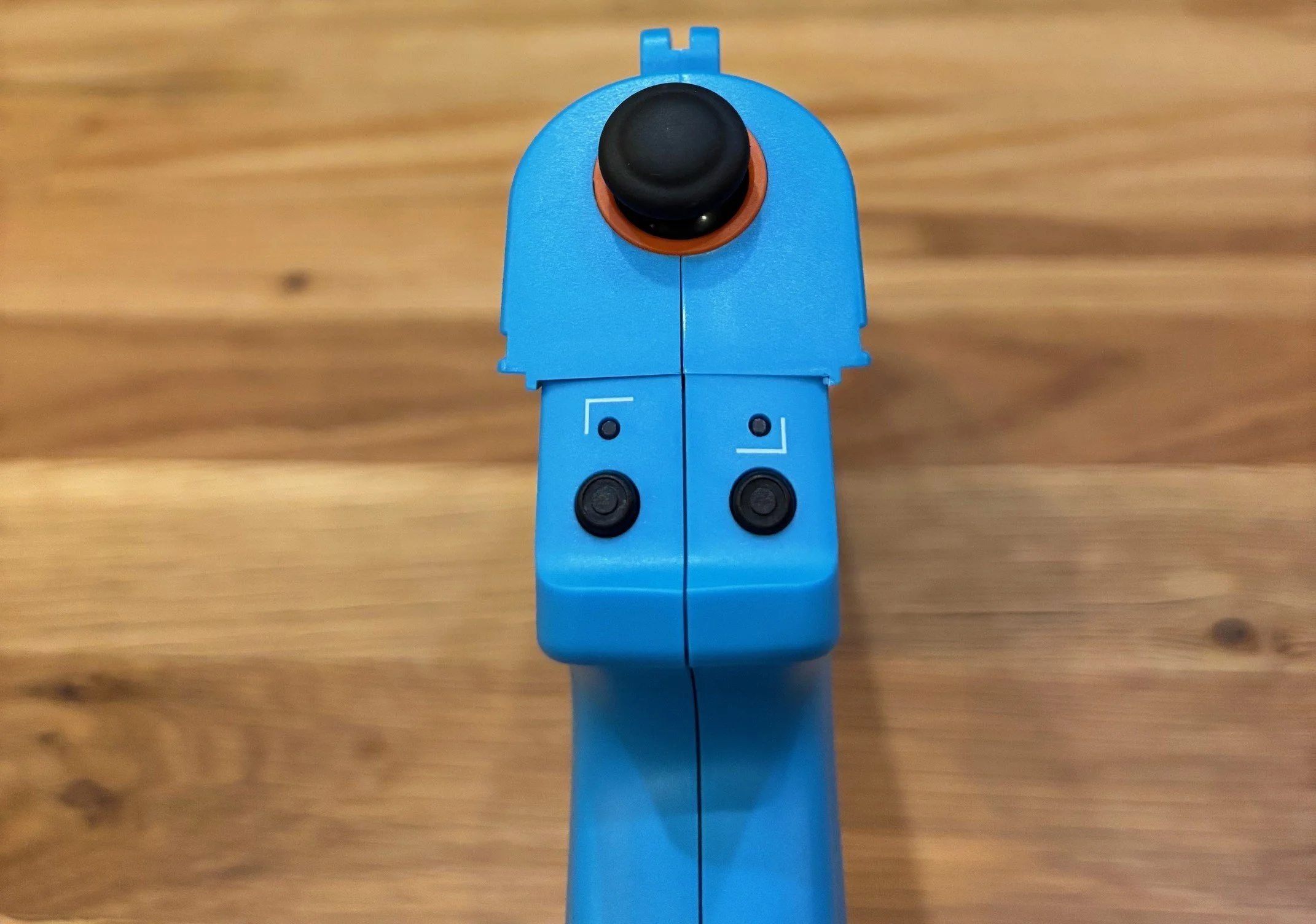
Moving on to the functionality, this gun has an interesting set of capabilities and compatibilities, since it’s designed for the PS1 and PS2 consoles, but there’s another interesting extra that some users have discovered, in that it also works on FPGA solutions and some PS3 consoles. It only works with the very rare natively backwards compatible launch model PS3 consoles that have the PS2 hardware built into it, and I’ve personally confirmed that it does not work when playing PS2 games through the downloadable PS2 Classics or homebrew PS2 games on the later PS3 models, since those technically play through an emulator.
While it does work for all models of PS1 and PS2, unfortunately, the gun only works with GunCon and GunCon2 games, and is not compatible with Konami Justifier games on either console. It will technically work with the Justifier games if you have a modded PS1 and have patched in GunCon support on your games through fan-made patches, but it won’t natively work on your retail copies of these games.
The package I received also includes a PS1/PS2 HDMI adapter, which means that you can also use the gun on modern HDTVs as well as on a CRT if you choose. This makes the Time Breaker quite versatile and unique in this regard, being able to play your older light gun games on original hardware with modern displays.
Now we’ll have to talk about one of the biggest downsides of the gun, something that still remains from the original prototype that I used last year, which is the aiming accuracy and in-game feel.
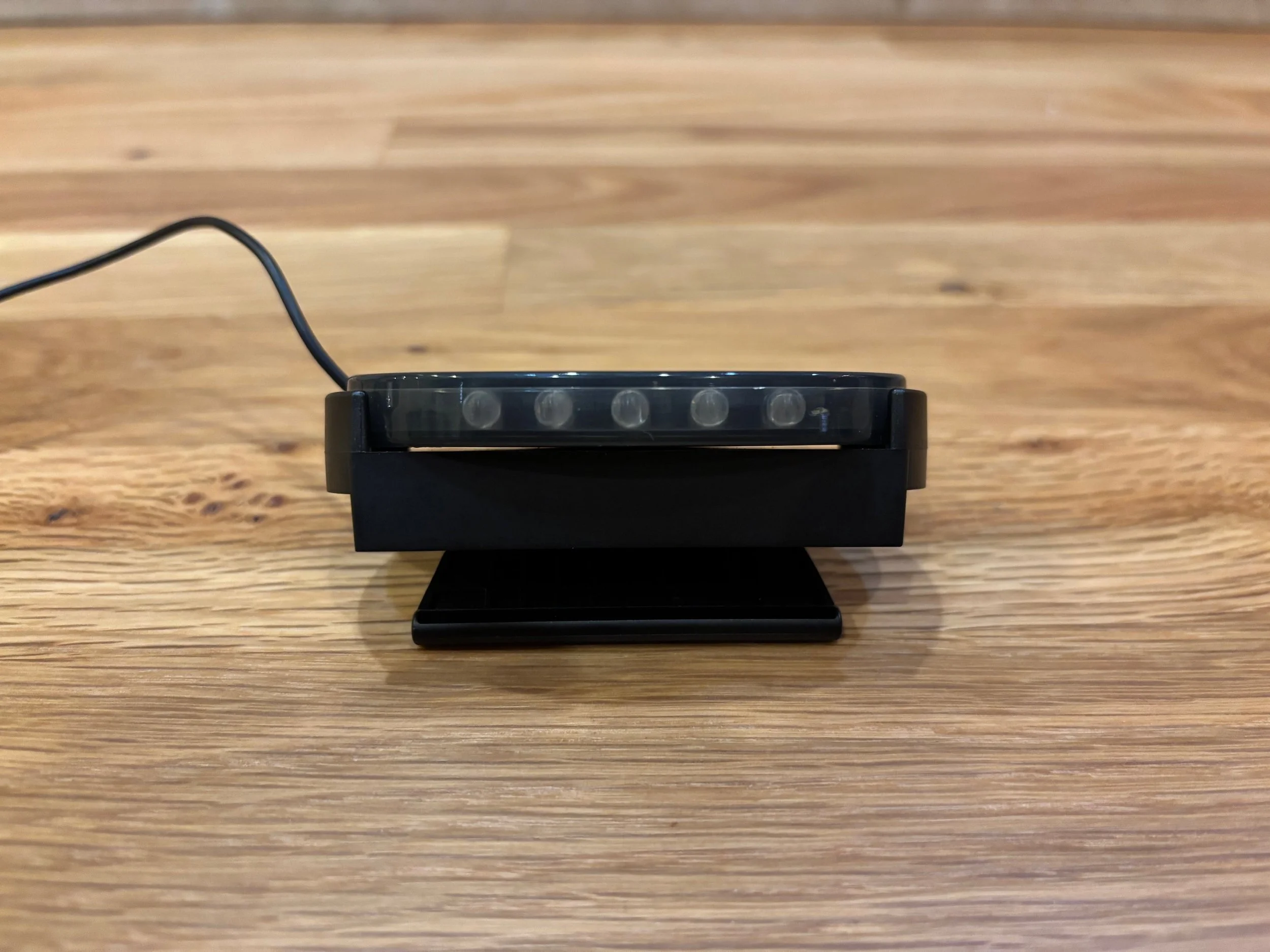
The choice to make this gun operate with only one sensor instead of at least two leaves the aiming feeling inaccurate, and when combined with the fact that it’s a Bluetooth wireless gun, also makes the tracking feel slightly laggy and imprecise. When you consider these factors in tandem with the fact that PS1 and PS2 light gun games did not have on-screen crosshairs like many of the modern light gun games do, it leaves a lot to be desired in the aiming department.
It’s certainly possible to still play and enjoy the games if you don’t mind credit-feeding your way through them, but in terms of having quick reflexes and accuracy or getting high scores and no-continue runs, it’s fairly unlikely you’ll be able to achieve that with the Time Breaker due to the tracking not using the CRT signal for your aim and a very slight delay in the wireless processing. Depending if you’re the type of person who tries to go for high-level runs or not, this could be a make-or-break factor for you with this gun.
Calibration ends up being a bit of a pain, with many factors to account for when trying to dial in your aim. First, there’s the sensor placement and your distance from the TV/sensor, which generally ends up needing to be a pretty large distance away. The manual gives a general estimate of distances based on TV size, and they’re pretty far overall, which makes the gun less functional in smaller gaming spaces with larger displays.
Aside from this, there’s several unique steps you’ll need to do to get the calibration set up in-game, which includes three different shots in any game’s calibration menu, with the manual only giving you some fairly unclear instructions on how to complete. Thankfully, they’ve uploaded a video with some more clear instructions online, which will come in handy when setting it up. There’s also a dial that can help manually adjust the vertical aim positioning, and though the manufacturer suggests not adjusting this yourself, I found it could be useful if you’re careful with it.
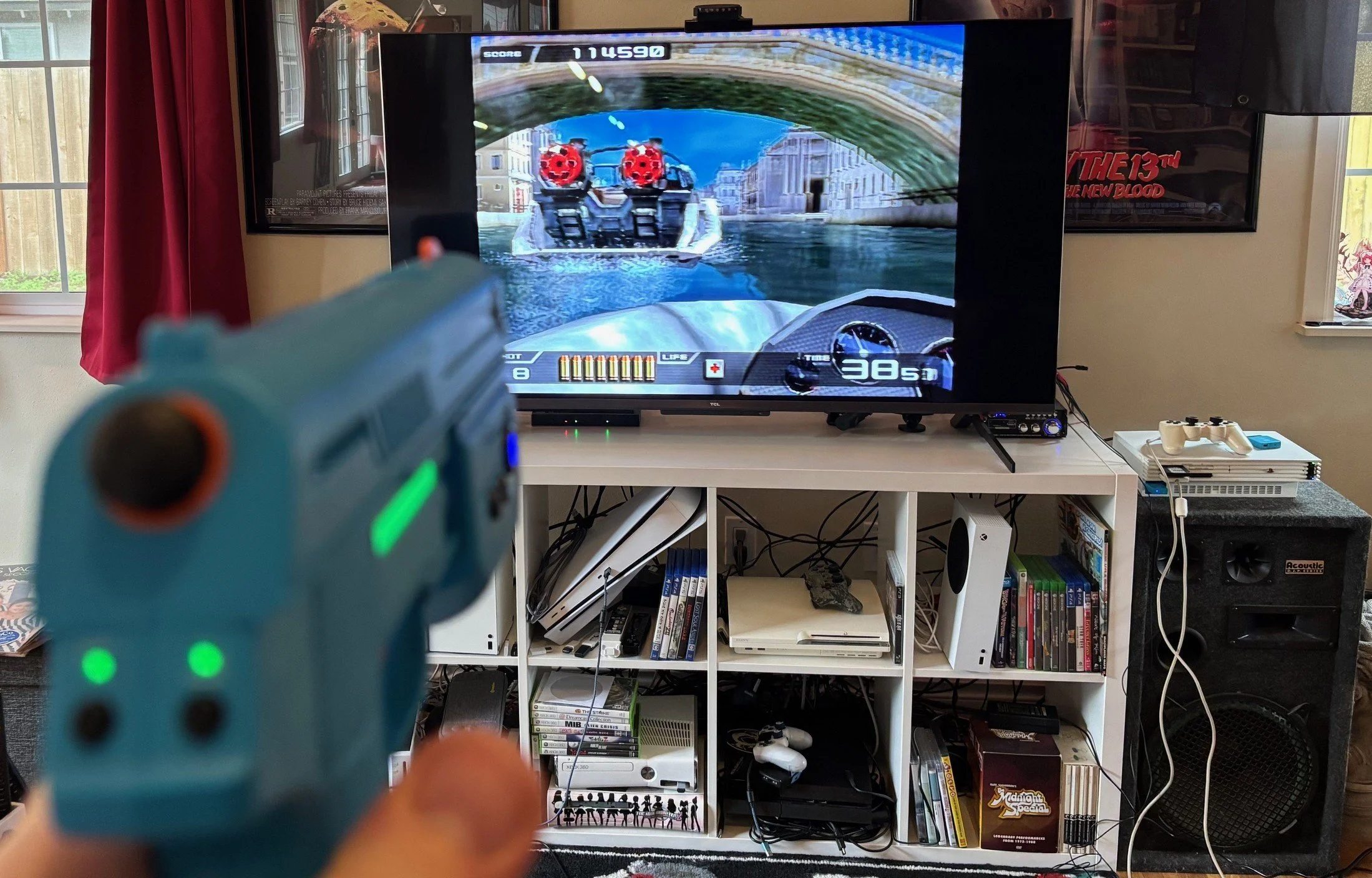
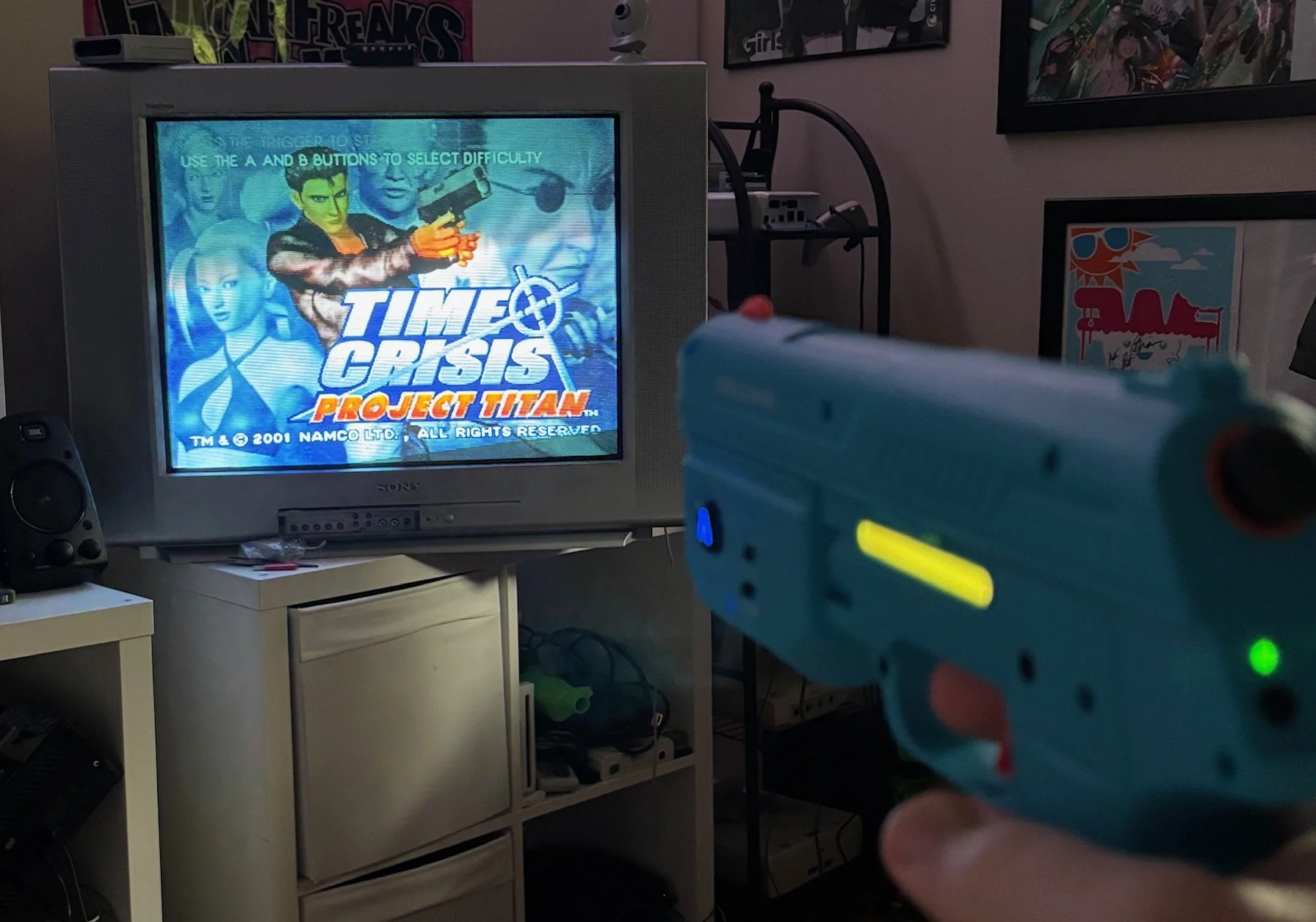
Even after thoroughly going through the calibration, the aiming feels similar to using a WiiMote, but again, you’ll have to keep in mind that Wii games had on-screen cursors for aiming to account for the relatively inaccurate and laggy tracking, but PS1 and PS2 games do not. I tested this on a CRT and several HD monitors and always generally got the same result, though the tiny bit of added latency from playing on HDTVs made the aim feel just a little worse than on a CRT. I tested it on over a dozen different light gun games on both platforms, and the results of the tracking and in-game feel was consistently imperfect.
As an added negative, if you happen to be playing a game where you need to shoot outside the screen to reload, the laggy and inconsistent tracking can make reloading quite a chore, once again, slowing down your reflexes and gameplay.
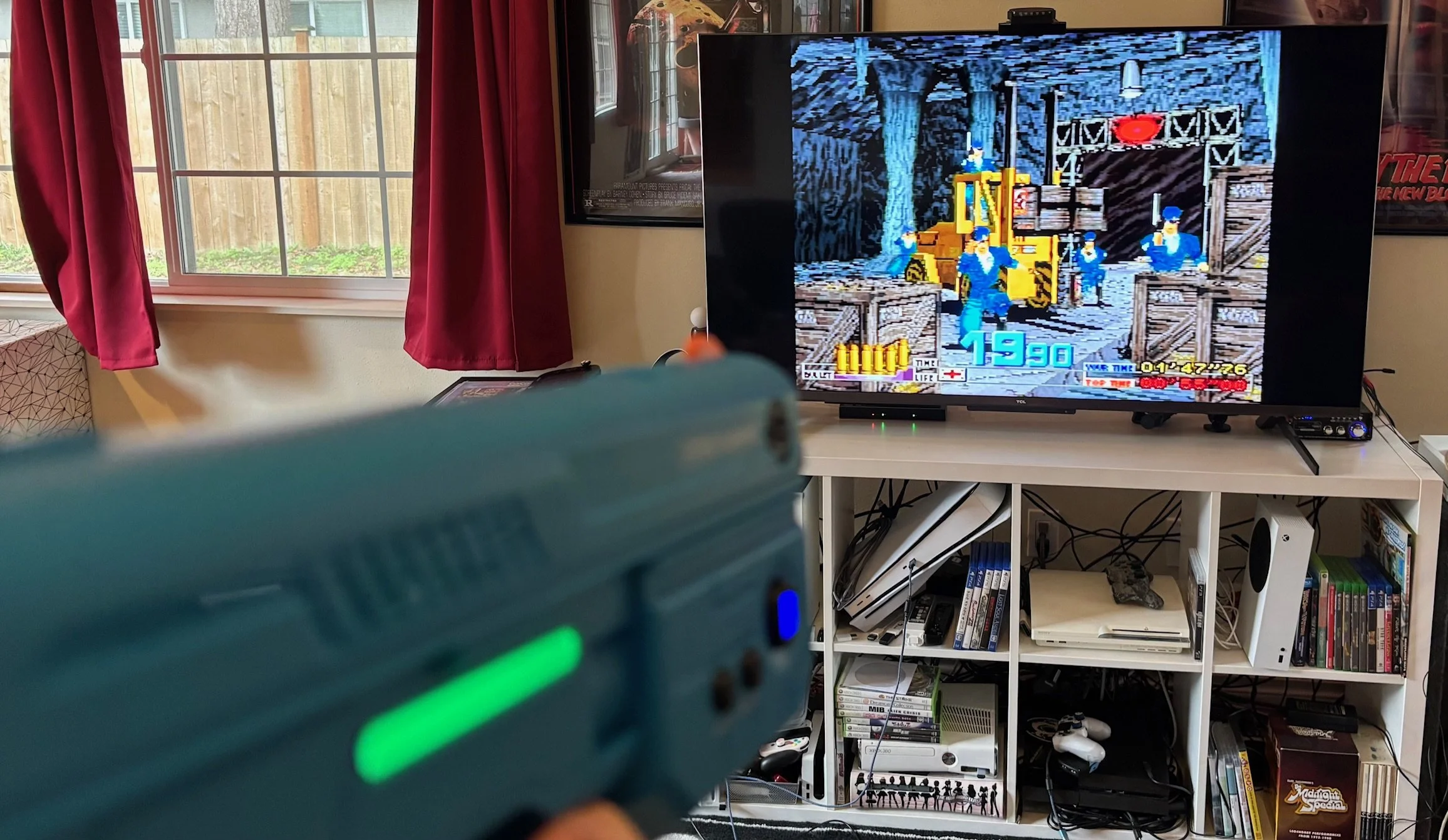
Despite an impressive list of features, it’s hard to say that the package would be worth the price tag for such a relatively inaccurate light gun experience, but it could still be appealing for the small market of people looking for a wireless light gun solution to play their retro light gun games on modern displays. You’ll just have to personally decide for yourself if it’s worth $120-140 to have that solution.
I’m hoping they can release some firmware updates/patches or maybe even release a new, more advanced sensor that increases the accuracy down the road, and I’m still excited to see how the PC version turns out when it releases in the future. However, the current state of the PlayStation version of the gun makes the Time Breaker hard to recommend for anyone besides the most devoted retro enthusiasts who want a wireless GunCon solution that works on modern displays and will pay anything to get it.